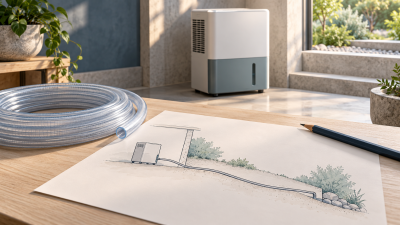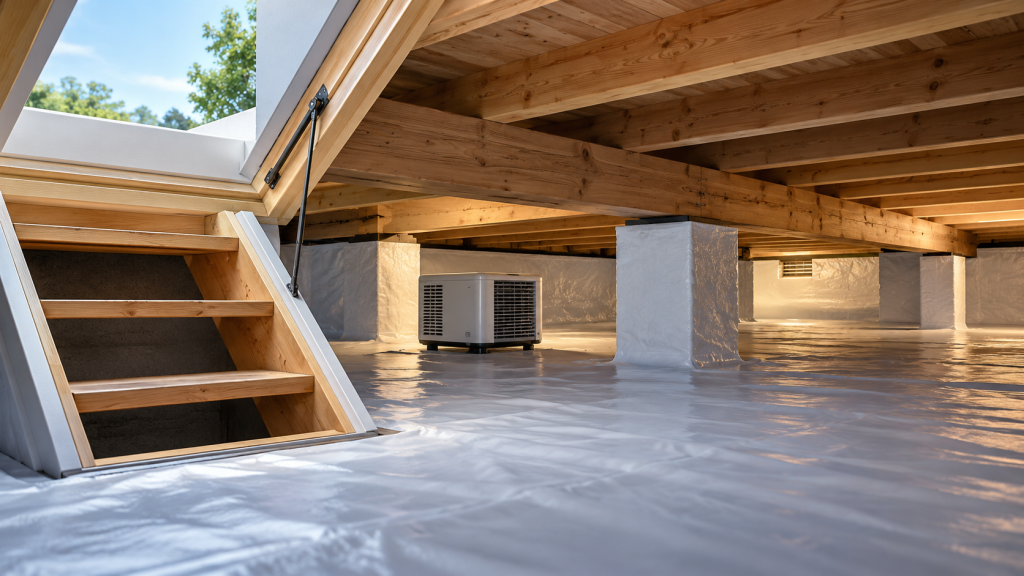
Start at the crawl-space hatch and follow the route the cabinet and its future service work would take. A bay is not a workable position simply because the unit fits inside it. You must still be able to reach the filter, controls and drain connection after installation.
Map constraints before choosing a bay
- Identify the path used to bring in and eventually remove the exact cabinet.
- Mark piers, ducts, pipes and partitions that interrupt the air path.
- Locate the intended power and condensate arrangements.
- Reserve the manufacturer’s operating clearance and service access.
- Have the installer specify suitable support and placement for the exact unit.
Do not place the appliance in standing water or use it as the remedy for an active water-entry problem. Building America’s assessment guidance treats standing water and its source as issues to address before retrofit work. This article selects an equipment location; it is not a crawl-space remediation or structural-support design.
A central point can still be a poor air path
Picture two bays divided by a low obstruction, with the unit in the geometric center but discharging into the obstruction. The map position looks balanced, yet it says little about air reaching the remote bay. Inspect the actual intake and outlet paths. Use only documented duct accessories and arrangements if a designer proposes ducting.
| Constraint found | Resolve before installation |
|---|---|
| Cabinet fits, but the filter cannot be withdrawn | Change the position or service arrangement. |
| Hose rises between the cabinet and drain | Assess a different route or appropriate pump. |
| Published clearances conflict | Get exact-model clarification; do not assume inches where a document prints feet. |
| Remote bay remains separated from the air path | Ask the installer how the intended area will be served. |
Do not use a remote display to excuse inaccessible equipment
Remote control can reduce trips made only to read a display or change a setting. It does not replace access for filter care, drainage inspection and eventual repair. Confirm accessory compatibility separately; a cable shown in a product photograph does not establish that a controller is included.
Handover checks to request
- Demonstration of filter access without dismantling the installation.
- Identification of intake, discharge and the permitted clearances.
- A visible or otherwise inspectable drainage arrangement.
- A representative measurement position away from the immediate discharge.
- The maintenance instructions and who is responsible for them.
A bay that fits is not necessarily a bay that works
After the installation is commissioned, compare conditions in the area you intended to serve. Sensor placement determines whether that observation is meaningful; ongoing monitoring helps track changes.
If you cannot provide access, airflow and drainage in the proposed bay, resolve the layout before buying a larger unit.