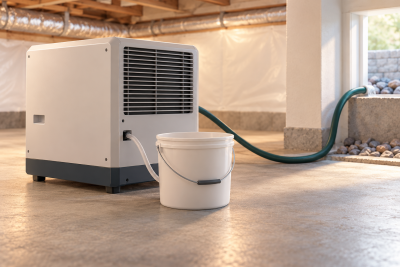
A pump that does not discharge needs a drainage check, not an automatic replacement diagnosis. Establish that the exact machine has a pump, that pump mode is enabled as instructed, and that condensate has somewhere permitted to go. If there is leakage or an active drainage fault, do not leave it operating unattended.
Identify the arrangement before touching it
Record the model suffix, the outlet in use and the code or indicator displayed. If no water is being produced at all, start with the no-water sequence. If water is backing up or the machine reports a drainage problem, stay with the discharge arrangement.
Disconnect power before handling hoses or serviceable components as directed by the exact manual. Do not reach for plugs or equipment while standing in water; have the electrical hazard addressed. The Shield 85P safety and drainage instructions, PDF pages 3, 5 and 11–12 require power-off maintenance and distinguish the gravity and pump connections.
An exact-model example: Shield 85P
| Manual detail | Why it matters |
|---|---|
| The unused gravity opening is plugged for pump operation | An open alternate path is not the documented pump setup. |
| The pump hose is secured at its designated connection | Using the wrong outlet or an unsecured connection changes the arrangement. |
| The display identifies whether pump function is active | A pump-equipped cabinet does not establish that the mode is enabled. |
| The drainage section associates E4 with drainage failure | A code points to a troubleshooting path; it does not by itself prove a failed pump motor. |
These details apply to the archived Shield 85P manual and must match the supplied unit. Do not use its key sequence, fittings or error-code meanings as universal Argendon instructions. The manual includes a forced-drain function, but this guide does not prescribe repeated forced cycles as a cure for a fault.
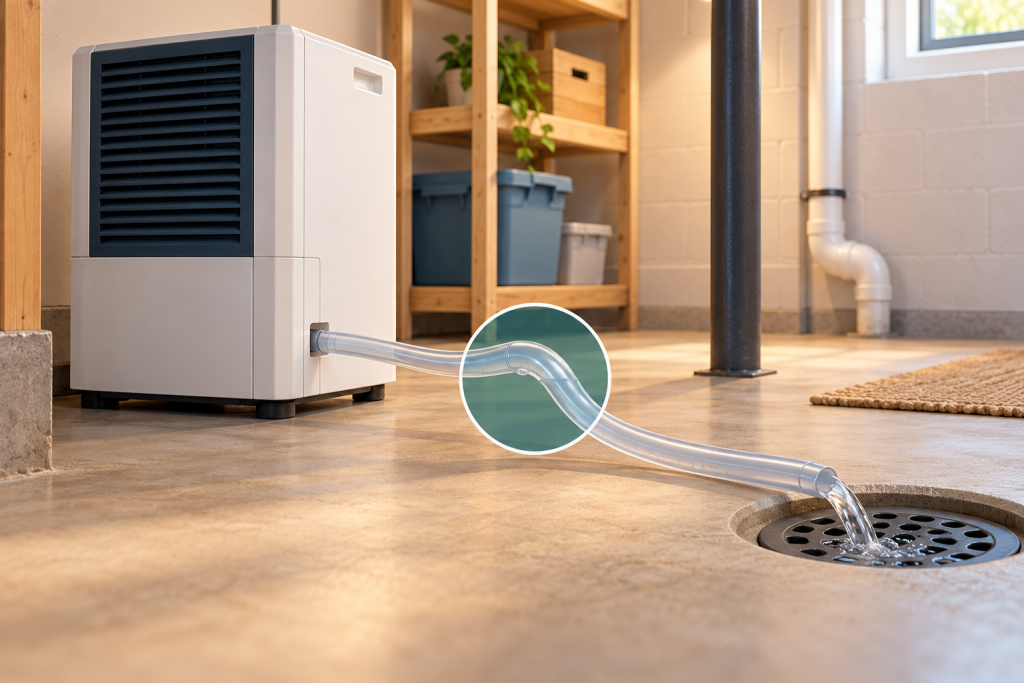
Trace the accessible hose
- Look for a kink, compression or visible damage along the accessible route.
- Inspect the outlet and destination for an obvious obstruction without opening the cabinet.
- Compare the route with the exact model’s lift and routing limits. Supplied hose length is not a verified vertical-lift allowance.
- After any permitted correction, restore the setup exactly as documented and observe discharge and connections before leaving it.
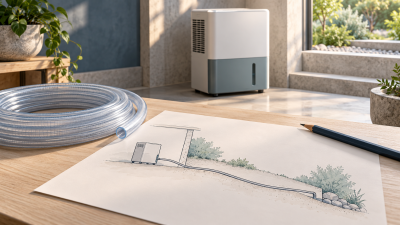
If a connection cannot be reached safely, make access part of the service request. Do not pull on a concealed hose or improvise a different support position to force the route to work. The pump-versus-gravity guide is useful if the intended route itself needs redesign.
When the checks stop
The Shield 85P manual moves from persistent drainage failure toward pump diagnosis and replacement. Its safety instructions reserve repairs for a qualified technician; the presence of disassembly drawings does not make pump replacement a routine owner check. Send the recorded code, route and observations to the manufacturer or installer rather than bypassing the fault.
Do not substitute a mode change for a working drain
Switching to gravity is only an option when a complete permitted gravity arrangement exists and the exact instructions support it. Disabling pump mode while leaving a rising hose does not create that arrangement.
Resume unattended operation only after the cause has been addressed and normal drainage has been observed.