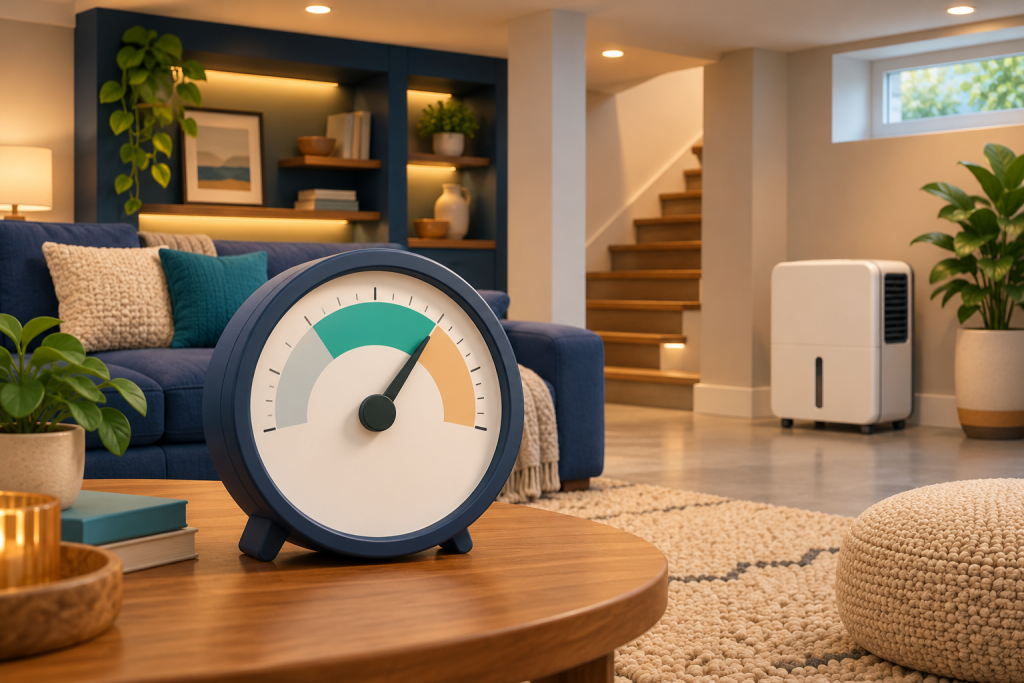
For routine basement control, start by evaluating a 50% RH setting and a separate hygrometer reading. The setting is a target; it is not a promise that every part of the room will immediately read 50%.
EPA recommends keeping indoor humidity below 60%, ideally within 30–50% where possible. This is general moisture-control guidance; it is not evidence that every machine must run continuously at 30%.
Keep a short adjustment log
| Entry | Example of what to record |
|---|---|
| Control state | Humidity mode and selected target; note if continuous mode was active |
| Room observation | Reading away from discharge air and obvious local moisture sources |
| Conditions | Doors, laundry, weather and any drainage interruption |
| Change | One deliberate adjustment, followed by another observation period |
Allow readings to settle before changing the target again. Comparing the machine’s display with a sensor in a different location can reveal a placement issue; it does not immediately prove one instrument or the dehumidifier is faulty.
Interpret the result before turning the dial again
- Target maintained and room conditions acceptable: decide whether more drying serves a purpose.
- Display appears acceptable but another part of the room stays damp: investigate that location and the air path.
- Humidity remains high throughout: check water entry, temperature, drainage and sizing rather than assuming the lowest target solves the problem.
- Wet wall or persistent condensation: investigate the moisture observation separately from the displayed number.
The Shield 35M uses a rotary control with 30%, 50% and 70% presets plus continuous operation. It cannot be treated like a digital unit offering any desired single-percentage setting. The 35M review explains why that matters when you want tighter adjustment.
Record the adjustment before making another
Follow the controls documented for the actual unit.
When cost is part of the adjustment, log the changed target alongside measured energy use so the next comparison remains meaningful.